The Reason Why

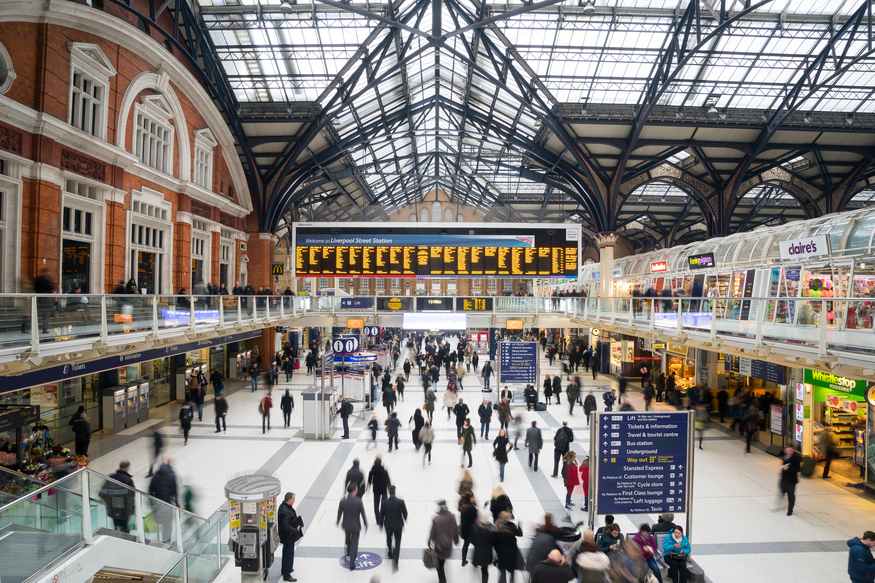
Photo by Red Zeppelin on Unsplash

When the ice finally retreated about 10,000 years ago, a shadow fell across the land. It was the shadow of the first human. With him or her (history does not record which) came the first stirrings of culture. S/he was part of a small band of hunter gatherers who scoured around looking for berries and the odd rabbit or the fire. They were most often cold. And wet. For the land in which they roamed, was a long, thin peninsula sticking its nose out into the Atlantic Ocean. The ocean, which on three sides of the land is the father and mother of gales and salt spray wind which howls over cliff tops, bending trees and whipping up depression and insanity in those who survived among the granite stones. For the best part of 8,000 years life was endured without anyone bothering to write stuff down. There were no pencils, no paper, no Facebook. We do not know what they ate because they left no pictures of their dinners. We do not know what they looked like because they left no selfies, and we don’t know where they went on holiday or what their feet might have looked like sticking out over Dozmary Pool. Not until around 100 BCE did anyone think to record daily life. The absence of domestic pets like dogs and cats doing funny things, and no hand held cameras to record the antics, meant we have no record of what was important to them.

They probably ate the dogs and cats in any case. 

Then, at about a quarter to six in the evening in Spring of 98 BCE (months had not been invented), Denzil picked up a bit of charred wood from the fire and playfully etched some marks on a pale stone nearby.

“ ‘ere, missus, take a look what I have gone an’ done…bewdy innit?” 

Denzil stood up proudly and pointed to the rough marks on the stone. His female companion,  Bianca, waddled over, raised a hairy hand to her brow, belched, scratched her arse, and gazed for 5 minutes at his efforts. 

“Wasson?” she grunted.

Denzil’s pride took a minor blow. This was the first artefact of human culture for nearly 10,000 years and as far as Denzil knew, he was the first Leonardo da Vinci, the first Shakespeare, or the first Barbara Hepworth, and all he got for his efforts was ‘Wasson?’ 

“ ken’t teach pork” he thought.  But he kept that thought to himself.

“Christ, I’m going back to me stone work, Men-an-Tols don’t make themselves”. 

Artists are often not appreciated in their own time. Denzil’s work of chipping a hole in a stone with the jaw bone of a hedgehog went unnoticed. He was in fact the first Barbara Hepworth, who centuries later, lets face it merely copied neolithic sculptors like Denzil. 

“Wassa Menantol then?” 

“Never mind, done they pasties ‘ave ‘ee?”

Not knowing what a ‘pasty’ was, Bianca sat down near the fire to continue gathering head lice from her 12 children. Head lice were often used as the main ingredient of neolithic risotto as a rice substitute. There was no rice anyhow in neolithic Kernow.

Denzil and his family were part of the tribe of the Dumnonii. However rather embarrassingly for Denzil, the border at the Tamar had not been written in charcoal on a sheepskin map anywhere. This meant the Dumnonii ranged into Devon and even Somerset! There would have been ‘ell up about this but everyone was too cold, hungry and wet to argue over such things. 

A bit drekly, the land of the far west was briefly visited by the Romans who upon noting the lack of grapes, sunshine and table manners, retreated back to Exeter, which at that time had no cathedral, christian civilisation or cider. Only pigs and mud. Another branch of the Dumnonii tribe lived there in a few huts by the river. It was called ‘Isca Dumniniorum’ by the Romans, who were thought of as ‘pretentious twats’ by the locals for speaking Latin. Funnily enough, this is a trait taken up by modern day ‘pretentious twats and out of touch toffs’ today. The locals called the small settelment ‘Exe’ which was brief but to the point, for in their language it merely means ‘the water’.

“Lets not waste energy on thinking up new words for where we live, bey”.

This approach of naming a village after its geographical topography worked well for tribes living near forests, mountains or in sheltered valleys. Their dwelling places ended up with charming names according the beauty of their immediate surroundings or the functionality of the place, hence ‘ford’ or ‘hurst’.  It did not work so well for everyone. Denzil’s village was called ‘Druth’, meaning ‘shitpit’ in the Britonnic language, due to its proximity to the open sewer. Many centuries later, the stream became a depository for the detritus of tin mines, turning the water red. The age old habit of naming where you live by what you saw resulted in the evolution of Denzil’s village name. 

Anyway. 

Nothing at all happened in the far west peninsula for the best part of 1300 years after the first scribbling of history in the year 0. Nothing much at all was written. A bit of gorse grew, pilchards swam in huge shoals offshore and gulls were bored, for they had no pasties to steal.  The pilchard shoals were so big and dense it was possible to walk from what would have been Porthminster beach to Godrevy on the back of the fish. Fish so dense, you would be keeping your feet dry as you walked. The sea was dark with their number. In fact this is how Jesus performed his ‘miracle’. Denzil had done it years before Jesus had a go, but had not written about it or been crucified because of it. That is why we do not have any Gospels written about Denzil. 

“ ‘ere minnit, Bianca, see! I’m dancing on the water” shouted Denzil one morning. The sea off Hayle estuary was black with fish. 

“Gisson, will ‘ee, I’ve got pig scrubbing to do, I ain’t got time to watch silly buggers doing the flora dance on the sea!”

“ Flora Dance? eh?”

“Never mind”. 

There was a bit of a kerfuffle in about 900 AD when the kingdom of Wessex, led by the ‘Great British Bake Off’ failure, King Alfred of ‘Shaftesbury’ (‘bury’ meaning fortified place, and ‘Shafte’ in Anglo Saxon meaning ‘penis’ – what?) thought they would control this little bit of wind swept, gorse scented land. Little did Alfred know, but by now Denzil’s descendants had developed their own language and culture called ‘Cornish’. They did not take kindly to the ‘English’ coming down imposing new rules and insisting on draconian measures like taxing cider, issuing blue passports for crossing the Tamar and ‘cream first’ tomfoolery. 

In 1337, the post of ‘Duke of Cornwall’ was invented in a thinly veiled attempt to sell biscuits to the locals in far away places such as ‘Red of the Druth’. 

“t’aint right, taint fair, t’aint proper” snorted the 14th century version of Denzil, while chewing on pig gristle and a bit of ‘hevva cake’. 

“they aint’ got no right coming down ‘ere telling us how to live and what to eat, I’ll wash my scrotum on Christmas day and not a day before, and if they bleddy English don’t like it, I’ll tell ole Trelawny”.

“You silly old tuss, it’s only 1337 and Trelawny aint’ even been invented yet. You’ll ‘ave to wait ’til the late 17th century before you can go marching and complainin’.” The voice of reason, as ever, belonged to Bianca. 

But she was wrong. Denzil’s descendants had a chance to march and complain before that. In 1497, An Gof, ‘the blacksmith’, fed up with King Henry VII insisting on the extraction of tax so he could trot off up north to try and subdue the rebellious Scots, organised the Cornish Rebellion. It was doomed to failure. 

What ‘appened was..”, a previous King, Edward 1st, granted local power for raising tax to the Cornish Stannary Parliament, but Henry thought otherwise. He suspended the Stannary Parliament and insisted that Cornish tin miners paid 20% vat on every pasty, every cream tea and every room they used as a holiday let. Ale house singing was taxed, as was fishing, rugby and going up Camborne Hill, which had a toll imposed halfway up (or down – depending which way you were going). 

Not for the first time did the inhabitants have a grievance about those from ‘up country’. The Romans, the Wessex Anglo Saxons, the Normans and now the bleddy Tudors! What next? Cornish identity, language and culture being suppressed during a religious conflict between King and Bishops?

Well, yes actually. Wait for it.  

Religion was a bit different in Kernow. Being so close to the world’s end, in between the sea and the sky and battered by wind and rain, the locals saw the Gods in varying guises. Christianity existed of course, it had arrived around 400-500 AD. An educated clerical Irishman, known as Ciarán, paddled over to Perranporth at that time. He stepped out of his coracle onto the beach, knelt down and kissed the golden sand, to be greeted by an incredulous Denzil. 

“Yeeew!” 

“Maidin mhaith a dhuine uasail!” (Good Morning Sir)

“Right on pard.”

“Inis Dom” said Ciarán “cá bhfaighidh mé roinnt bia agus dí?” (tell me, where can I get some food and drink?)

“spec ‘ee ’ll be wanting a pasty and a pint of rattler?” 

“post ceart!” (proper job!).

They got on famously after three pints, so much so that Denzil thought Ciarán would make a “bleddy ‘ansum saint”. Not being able to speak Irish, and thereby mangling Ciarán’s name, Denzil decided to call him Piran (Denzil could not spell ‘Perran’) after the beach where he first met him. Christianity had arrived but due to the characteristics of the Cornish and the land they lived in, it took various forms and intermingled with pagan rites and customs (sun worship and sacrificial turnip burning) so as to become unrecognisable as Christianity by Tudor times. 

So, indeed the scene was set for another ‘up country’  interference over religion and language.

In 1549, the Book of Common Prayer was introduced but there was ‘ell up as a response.  It was later called ‘The Prayer Book Rebellion’. Denzil and Bianca hated the new book, because it introduced English into the liturgy. Churches all over the county had to use the new, and to some dangerous, new words in a strange tongue. For a start ‘drekly’ was replaced by many different English words. The Book of Common Prayer used ‘immediately’, ‘very soon’, ‘in a bit’ ‘later on’, ’whenever’ and ‘half past five’ for ‘drekly’. For example, in the book of Revelation, Jesus said “Look, I am coming soon!”. Well when was ‘soon’ ? The book should have said “I’ll be over drekly” then Denzil would have understood. As it turns out, Jesus was a bleddy liar because 2000 years later he has still not turned up, which even to a Cornishman is stretching  the meaning of ‘drekly’ to beyond breaking point.  So, no one in Cornwall then knew when anything was going to happen. They knew where they were with ‘drekly’ but the plethora of neologisms caused no end of confusion.  

This confusion with language was not helped by living conditions. The Cornish were not exactly rich, in fact they existed on a diet of beetroot, tree bark, and the odd lick of a damp potato. They drank gallons of cider, lived in a one room ‘cottage’ and in the evenings played games in the dark such as ‘name that lesion’ or ‘Splat-a-Rat’ involving a broom handle, goose fat and the resident family of long tailed vermin. To the injury of poverty was added the insult of an English prayer book. 

It proved to be the final indignity that the people could peaceably bear. Two decades of oppression were followed by two years of rampant inflation, in which cider prices had quadrupled, saffron was being rationed, and social distancing being imposed by English Landlords on those thought to be of rebellious nature. So, an army gathered at the town of Bodmin under the leadership of its mayor, Henry Bray.  The aims of the rebellion were highlighted in the slogan “Kill all the gentlemen” leading to many of the gentry hiding away in castles such as that at Trematon and St Micheal’s Mount. 

The eighth Article of the Demands of the Western Rebels stated: “and so we the Cornyshe men (whereof certen of us understande no Englysh) utterly refuse thys newe English”.Responding to this, however, Archbishop Cranmer asked why the Cornishmen should be offended by holding the service in English rather than Cornish, when they had before held it in Latin and not understood that?

This was lighting the blue touch paper, but it did not end well. Battles were fought at Fenny Bridges, Woodbury Common, Clyst St Mary and Exeter was put under siege. At Clyst Heath Cornish 900 rebels were captured, bound and gagged and their throats slit all within 10 minutes. At the battle of Samford Courtney the Cornish were so bloody minded that they did not give in until most of their number had been slain or captured. 

This was known afterwards as the “Jam and Cream” Wars. The Red of the Jam symbolised Cornish Rebel blood spilled for freedom while the White of the Cream symbolised cream because the Cornish just liked cream. But preferably without the blood of Cornish Rebels splattered over it. 

Christianity is a religion of peace. Jesus even said so. The Old Testament bits about smiting, floods and plagues was just God having a bit of a laugh and getting his eye in regarding managing his Creation. However, after learning that he was not good at the ‘hands on’ stuff God decided to leave it to Jesus to have the final say, and to then sit back, crack open a beer, wait for the internet to invent porn and Match of the Day. 

Sadly in the 17th Century, the followers of Jesus – who had banged on about the ‘meek’ and the ‘peacemakers’ and the ‘merciful’ – decided enough bollocks was being talked about ‘how to go about living in harmony’. Catholics and Protestants differed in their understanding of just how peace should be promoted among men. They also differed on how religion should be practiced. Catholics liked a bit of dressing up, drinking and carnivals involving meat and orgies while the Protestants preferred to sit in the dark on cold damp stone floors trying not to think about masturbation. 

No one would have cared except that Monarchs tended to favour one or the other, and as they did so they would favour rich men, landowners and their Bishops. This set up a tussle for Royal Patronage among the aristocracy.  It came to pass that a certain English King was fond of orgies and wine while his bishops favoured self denial. Denzil and Bianca could not give a toss either way. They did not have the money for wine and there were so poor living in ‘Red of the Druth’ that self denial was a given. They could only dream of having a stone floor in the dark to sit upon. 

In 1688, King James II (over fond of wine and orgies) and the Bishop of Bristol (licker of candles) clashed. Trelawny, as the Bishop was known, objected to James’ imposition of ‘Indulgence’ to Catholics. James was having none of his nonsense and so imprisoned Trelawny and 6 other Bishops who had dared to protest, in the Tower of London. Being born of an old Cornish family in Pelynt, whose father was 2nd baronet of Trelawne, Denzil and his mates took umbrage.

A plot was hatched in the ale houses of Penwith and Bodmin. And probably elsewhere. The detailed discussions about what to do about Trelawny, over several pints of Rattler, went something like this: 

“Yeeew!” Denzil.

“Yeeew!” Boy Trevaskis.

“Right on?” Denzil.

“  ‘ess, yew” Boy Trevaskis.

“Wasson?”

“Matey’s been arrested”

“Matey?”

“You know, Trelawny, used live up Pelynt way”

“oh, ‘ess, I know ‘un”

“madder do ee?”

“t’aint right, t’aint proper, taint fitty”

“you been watching Poldark?

“Gisson”

“So, shall Trelawny live, or shall Trelawny die?”

“If ‘ee does, there’s twenty thousand of us who will know the reason why”. 

“Don’t be bleddy daft, we’ve just got back from battles at Stratton, Taunton, Bridgewater and Bath. Bristol was a bit of bugger. Then we had to fight at Dorchester, Weymouth, Portland, Bideford, Exeter and bleddy Dartmouth!” 

“….you’ll be wanting a pasty and piece of Hevva cake after all of that.”

“proper job me ‘ansum”

The rest is history. The bishop got off when William of Orange became King and restored the right of Protestant candle licking and the silent contemplation of masturbation in cold dark chapels.  John Wesley later kept up Protestant privations urging the uneducated masses to sing dull songs on cold days when they should have been still in bed after 6 days work killing themselves down the mines. 

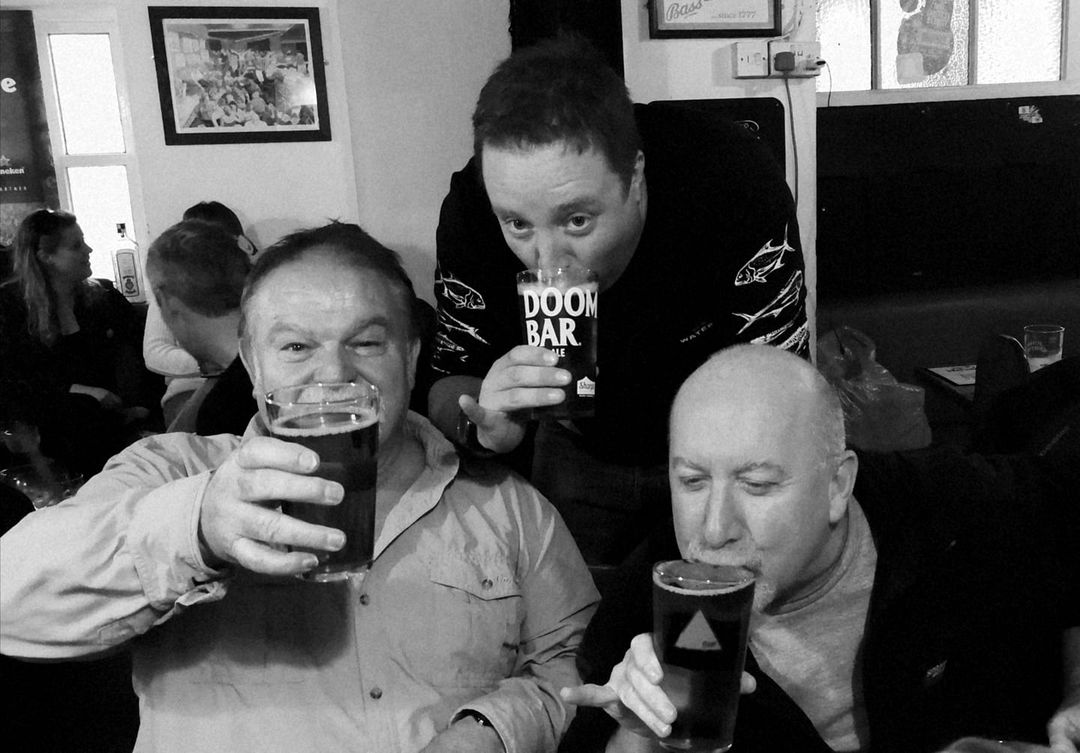
Emmets on crossing the Tamar can feel this history weighing heavily upon the sea mist and the wind swept moors of Bodmin. They will read in the old place names, the defiance of the Cornish to the Roman, Norman and Tudor invaders. Today English culture faces resistance as Cornish pasties and Cornish beer have reversed the invasion. You can go into any pub or high street in England and you will find Cornish ale. When you are next in London,  and you see a Cornish Ale on tap, and you wonder how it got there, you will know the reason why.
I’ve always loved food.

 Photo by Dan Gold on Unsplash

Well, almost always, there were a few exceptions. 

The 1970s for example. This was a decade that feasted on the dead corpse of the swinging sixties, like a toothless old man gnaws at the bones of the three day old Christmas turkey who then, when finding that the meat has long gone, vomits up his breakfast in the vain search of protein. Old men without teeth, whose mouths are gaping black maws scented with the sulphurous odours of Hades, should absent themselves from certain activities for the obvious reasons. They should never offer kisses to the Bride. They should keep away from hamsters searching for dark warm places to hibernate, for the hamsters sake. They should only come into the kitchen so that their lips can be used as a seal and their heads then pumped up and down to unblock the kitchen sink after a particularly lively party of teenagers have used all of the vodka and vol au vents in a competitive game of  ‘drink and spew’. 

The 1960’s promised a new era of fashion, of social experiments, and avant-garde art and in certain small parts of London and Liverpool, the decade succeeded in doing so. In Camborne and Redruth, history was much slower to arrive. The Victory at Waterloo of 1815, was announced on horseback at Camborne town clock in 1963, just before the council ruled witch burning could only take place on Wednesdays to provide entertainment in lieu of the trains stopping. There were hippies on the harbour at St Ives for sure, but they all came from ‘up country’.

The 1970’s thought it would carry on the 60’s revolution but forgot that most of the country between 1960 and 1969 was still living as if it was 1945-1955, only without the bombs and the Black Shirts. Rationing of course had officially ended in 1954 but for most it carried on in spirit. We kept calm and sucked the juices out of a marrow bone awaiting the arrival of a prawn cocktail and a Mateus Rosé to enlighten our culinary darkness. Skinny dogs wandered the streets always looking over their shoulders, to avoid becoming Hors d’oeuvres for hungry Miners on Sunday. The fat dogs had already been eaten. ‘Sweetmeats’ meant something quite different back then. 

In Picardy, Alsace and Burgundy, French peasants ate foie gras, terrine de canard au gratin de Provence and Pomme marinière avec crème Gascoigne, accompanied by a dry Chablis or a robust Burgundy. That was just for breakfast. Meanwhile, the English working class rinsed their mouths with a spoonful of dry oats and warm water three times a day and cursed the day the sun rose on their father’s first flush of unleashed priapism. 

Breakfast was lard and white bread. Dinner at midday was lard and white bread and an over boiled pea, and tea time at 6 was a rich tea biscuit, lard and white bread. Supper was a clip around the ear with a coal blacked, hairy back of the hand. This was followed by ‘get to bed, you whining little shit, or I’ll tell your father’. Only the posh on the telly ate ‘supper’ and they confusingly had dinner after tea time! 

Rationing meant half green black eyed potatoes, worm worn carrots and mushrooms growing on two week old cracking, crusty cow dung, if you were lucky and living in the country. In cities it meant lard, potatoes and vinegar bleached placenta.  Root vegetables were also staples and this really meant only barely buttered parsnips and swedes the size of billiard balls. Cabbage boiled to within an inch of evaporation meant that all minerals, vitamins, fibre and taste had dissipated into the air leaving only a green spongiform mass on the plate to take up the space where the meat could have been and to hide the cracks in the ceramic glaze.  The only meat available was on a Sunday. Rabbits were told to run and with good reason. Chicken was as expensive then as a three week luxury cruise in the Caribbean is today. This is because they were still free range, being hand fed corn by diary maids in their spare time. A beef joint was the equivalent of the mortgage on a whole Cotswold village. Pork was available due to the fact that every house had a back garden or yard in which to raise a pig. The pigs had a great life snuffling among the detritus of the brick outhouse and kitchen scraps where the children used to play at skipping and throwing marbles at the cat. It was not unhealthy for them. The ones with weaker dispositions and undeveloped immune systems had already died before their first birthdays, leaving the stronger to grow up endure the rigours of a working class winter eating the leftovers of their fathers’ fish suppers. 

Photo by Andy Wang on Unsplash

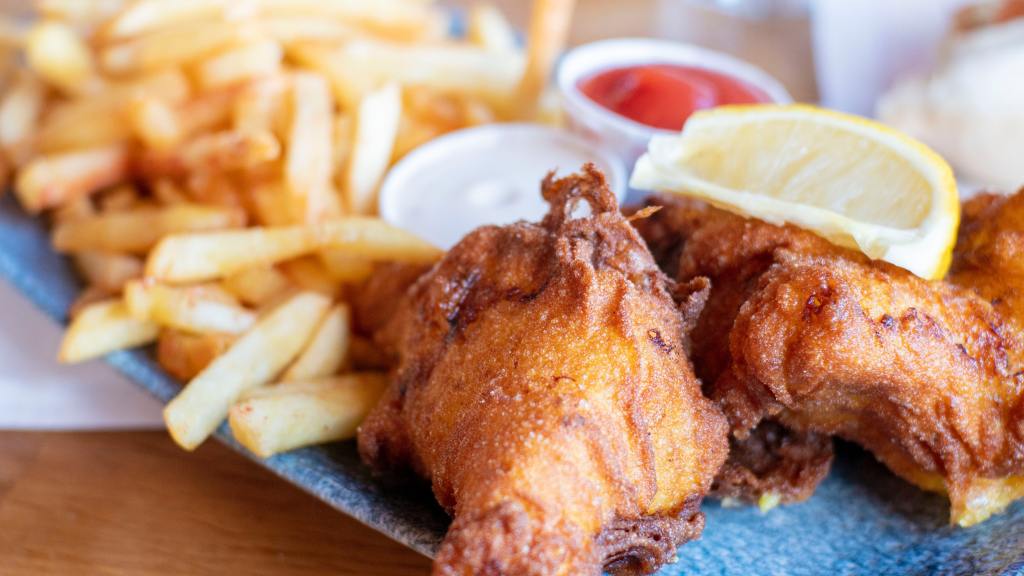
Fish and Chips! The absolute height of culinary achievement. Even during rationing fish and chips was still available to the working poor (i.e. everybody). Churchill referred to the dish as “the good companions” as he sipped his port and brandy after a post prandial bash  of pheasant and quail eggs at Chartwell. He was lucky not to have seen the 1970s, for if he had seen what food developed into, he would surely have wished we had lost the Battle of Britain.  We did not fight them on the beaches only to be served food tasting of sand and glue, and with as much visual appeal as the green outpourings of the bile duct. 

I remember eating bowls of porridge for breakfast. It was made with hot milk. So much sugar was added that it melted on the surface and created a sweet semi clear caramelising liquid that would sit around the edges of the bowl until I mixed it all in with a spoon. I ate the equivalent of a whole plantation’s output of sugar in the 1970s, so much that my blood was stickier than the licked surface of a toffee apple and twice as sweet. I might have died of type 2 diabetes if it were not for the protective properties of the oats. Running around wildly shouting my head off and sticking my hands up the skirts of the schoolgirls in the junior school playground at break times was down to the high sugar intake rather than natural high spirits of a pre pubescent boy. That is what I said to the social worker. I don’t know what the headmaster’s excuse was. 

The 1970’s descent into the culinary abyss and nutritional deprivation was started by Margaret Thatcher, for so it was in 1971 that the rot really set in. 

It was a cold rainy Wednesday in Margate sea front, when Mrs Thatcher came upon a mother sitting on a bench breast-feeding a newborn. The babe was suckling happily while Mum thought of the myriad ways of stabbing her husband in the face for making her pregnant for the sixth time. Thatcher came up close from behind her and with a swipe of the hand smacked away the breast from the babe’s mouth depriving it of sustenance. The mother looked incredulously upon the milk now spurting sporadically from the bare nipple into the baby’s face, but being working class, deferred to the better judgment of the Tory Education Minister who, in the mother’s eyes must have known best. Thatcher ran away laughing, high on her success, “I’m so happy, I could sit on Dennis’ face”, was the Daily Mail’s front page headline the next day.  

This moment must have stuck in Thatcher’s mind, for a little later she decreed that all milk for ever and ever should be removed from schools. The driving force for the action was to weaken the working class into submission through starvation, to break the powers of the Unions whose members would in time be skeletal wrecks of their former selves and only just able to carry out the work allocated to them. The preface to the ‘Milk Deprivation Bill 1971’ began with “Start with the children” she wrote “Starve the little fuckers until they beg for mercy”. The real reason for the defeat of the miners 14 years later was that most of them were either products of this earlier privation or had kids so weak from malnutrition they could not really afford to be on strike. During the 70’s working class miner’s kids prayed for death in order to ease them out of their starving misery as they searched gutters for apple cores and the worm infested remains of pork pies. There were no slow or lame pets in towns like Workington.  Old favourites like Lancashire Hot Pot often included Hettie the hamster. Many an old woman in rain soaked brick terraces cried herself to sleep lamenting the disappearance of her cat, unaware that just next door the street urchins were placing pussy in the pot. 

Surely, you cry, the 1970’s was not all bad on the food front and surely the working class was not so weak as to succumb? 

You do not know of Thatcher’s Grand Plan. The milk was just the beginning. The theory was that well fed working people might start having thoughts for themselves and so come to unite in order to lose nothing but their chains. Napoleon, no less, stated that armies marched on their stomachs. Cornish tin miners without their pasties was as unthinkable as Tom without Jerry, Laurel without Hardy or Jesus without Judas. 

My recollection of the 1970’s included ‘shop bought’ pasties which if eaten resulted in a negative nutritional state, they actually made us worse of in terms of minerals and vitamins. Each greasy mouthful leached the micro nutrients from your stomach lining and deposited a thick layer of fat. Thus they contributed to the making of the cardiovascular and obesity epidemic that continues to this day. We were served barely cooked, unseasoned, garlic and herb free mince and onions swimming in a weak gravy of piss. And school dinners so rancid they ought to have been defined as child abuse. Sailors in Nelson’s Navy having been at sea for weeks without landfall and thus reduced to eating the worms in a ship’s biscuit, licking the tar from between the decking and collecting fluff from their belly buttons until they had enough to make a soup, would have baulked at what passed for a school dinner. The mash potato was so thin it tasted of wallpaper paste, the beetroot was so acidic as to induce vomiting and the custard so thick and glutinous it could double up as cement. We were forced to eat it or be sent to the headmaster’s office for a thorough thrashing on our naked buttocks. He liked to use canes made of birch wood with little nicks cut into them for that authentic ‘cat o’ nine tails’ look. Thus were the seeds sown for Operation Yew Tree later on. 

None of this mattered of course to the Governing class. The working class ever since the Civil war was as expendable as a dock leaf as an arse wipe, and to be blown away into oblivion much like a match lit fart. The war had taught us that a diet of lard and broken biscuits was sufficient to build ships, mine coal and for throwing ourselves onto bayonets. While Generals, Bishops, and Foreign Secretaries dined on  ‘haute cuisine’ washed down with gallons of Claret, we were left to scavenge for the remains of a chicken’s gizzard and a lightly soiled turnip. 

Alcohol was the saviour. Without beer, gin and cider the country would not have functioned. As we all know booze provides calories, as well as bonhomie, bawdiness, babies and brawls. The Chapel frowned upon such matters of course, and we were treated to biblical jeremiads about the perils of booze. Sitting in the pew, we nodding sagely when the vicar, priest or parson, berated us for indulging in the sin of drinking. After the service, it was straight into the pub. Drink was the only antidote to the unremitting working class culinary desert that was the 1970’s. Drink or a War, the latter we had tried recently and found that it hurt. 

The 1970’s. 

Happy Days. 

Upon the Just and the Unjust

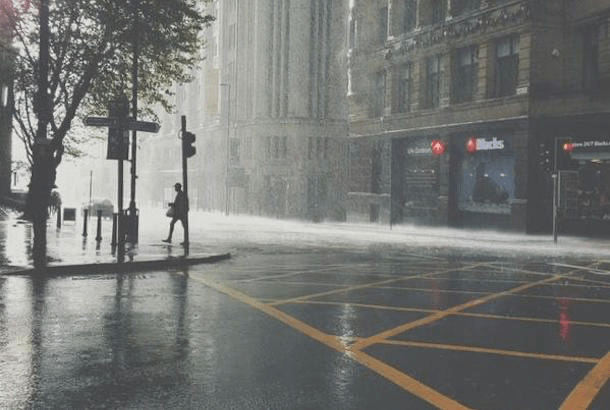
There is something very comforting about the gentle splattering of rain on the window, especially if that window is double glazed and the room one is sat in, is warm. Beads of water, each with its miniature rainbow, creep down to the sill leaving in its wake a tiny streamlet which twists and turns. The sound of rain can lull one into slumber.

Outside the sky is uniformly overcast and grey, the shrubs in the garden sway in the wind, and a blackbird sits resolutely defiant in the branches of the Bay tree at the bottom of the garden. Not singing, just staring into the wind and if he had a middle finger, it would be ‘giving the bird’ to the prevailing conditions. They are made of strong stuff. They eat worms.

It is difficult to make light of the new ‘rainy season’ in the UK. India has its monsoon of course, followed by sunshine. And for those that have forgotten what that looks like, just google it. They have some in Lanzarote I believe. Our rainy season started about tea time on October 4th 2019 and continues almost uninterrupted ever since. It will continue past the Ides of March, through the annual celebrations involving Eggs, Bunnies and an empty tomb, and on towards August bank holiday.

There will be respite for a few days then the rainy season recommences about October.

I’ve read my Bible. I’ve read God’s promises to Noah. A rainbow is just not good enough. Loaves and fishes and wine from water might seem impressive as miracles go, especially if you are feeling a bit peckish. Yet, if raising from the dead, the healing of lepers and walking on water are everyday trifles to an omniscient all powerful force, surely the odd break in the weather is not beyond the creator of the Universe?

When I shut up the heavens so that there is no rain, or command locusts to devour the land or send a plague among my people, if my people, who are called by my name, will humble themselves and pray and seek my face and turn from their wicked ways, then I will hear from heaven, and I will forgive their sin and will heal their landThe Bible 2 Chronicles 7 v13:14

Even Allah is at it:

Do you not see that Allah drives clouds gently, then joins them together, then makes them into a heap of layers? Then you see He brings forth the rain from their midst. And He sends down from the sky hail mountains. So strikes therewith whom He wills, and averts it from whom He wills. The vivid flash of its lightning almost takes away (blinds) the sight” . The Qu’ran.. Surah An Nur 43

…and as for the Jewish God:

God’s responsibility for dispensing rain in the land of Israel is a central aspect of (the Jews) covenantal identity. Not only do (they) live in a land that depends upon God for rain, but God’s gift of rain will be conditioned upon the fulfillment of… covenantal duties“. Rabbi Lauren Burkun

What do I have to do to placate whomsoever is in charge of rain? I admit to renouncing my faith, but surely the drowning of the whole of Britain for my past sins is a bit much? I don’t have a covenant with God (I’m not a Jew), and I am, it seems, at the mercy of Allah who strikes whomsoever He wills! I don’t see why the inhabitants of Bewdley, Hebden Bridge or Boscastle should suffer because I once called Jehovah a bastard? Did my observation, that Abraham was a murduring dumb c*nt for even considering stabbing his son to rid his head from ‘the voices’, displease the Deity? Anyway, I thought God used floods and pestilence to combat the outbreaks of same sex interplay rather than my profanities? What is it anyway with sex involving fluffy handcuffs, silicone dildos and buckets of lubricant that Yahweh, Jehovah, Allah or God finds offensive enough to visit an ocean of water upon our heads every Friday night?

I can be wicked I know. And so perhaps I deserve God’s punishment. I have a long list of ordinary sins, and a short list of heinous sins. I don’t know the difference between a mortal sin and a venial sin, but after a bit of searching I find that sin can be divided up as follows:

  • sins of gravitymortal and venial;
  • sins of the state of the conscience,
  • sins of act or state: whether actual and habitual;
  • sons according to the person offended: sins against God, against neighbor, against self;
  • sins of manner: of commission or omission;
  • manifestation of the sin: internal, external;
  • author of the sin,
  • sins of attention: deliberate, half-deliberate;
  • cause of the sin: ignorance, fragility, malice;
  • then of course special disordersins against the Holy Ghost and sins that cry to Heaven for vengeance

Jesus Christ, who knew sinning could be so complex? And here was I thinking a) nicking the sixpence from the meter box on the back of the rented TV back in the 1970s or b) being shown my friends’s sister’s knickers (she was still wearing them) in the garden shed at age 9 or c) giving out false scores to the teacher on non existent homework during chemistry lessons, was about the limit of naughtiness.

Upon reflection, I think I have commited a mortal sin more than once. This is sin so serious as to separate me from God’s saving grace. It is a ‘peccatum mortale‘ such as denying the Holy Spirit and is different from a mere venial peccadillo such as licking the cream out of a custard cream biscuit and then putting it back in the tin. I have a very long list of pecadillos. Some of my favourites involve wine, a spare afternoon and a willing female accomplice who has the capability and flexibility of a Russian gymnast and the energy and force of an exploding Volcano.

Sins of conscience? Well, that would depend on me having a conscience, a singular lack of which has led me down many a merry ‘garden path’ without blushing, even when caught. Just ask a certain forthcoming with her charms student nurse in Plymouth circa 1986…or was it 1989..?

Habitual sins? Well as a creature of routine, custom and habit, I am sure I can find a few that I indulge in daily, weekly, monthly, seasonally and yearly, In fact, you name a time span and I bet I can find a sin that I habitually commit within it. These habits are both things of commission, such as eating a pork pie even when sated, or of omission such as habitally forgetting to keep the promise of only having ‘just one pint’ in The Sloop, St Ives.

Why do I sin? Through ignorance? Such as not knowing the student nurse had a boyfriend before I introduced her to the joys of ‘afternoon delight’ following lectures on anatomy and physiology? Through malice or fragility? Nah, not for me the inattentive sin…I like to sin based in raw, naked pleasure rather than some ‘malicious evil towards‘ type sin. If the sin involves taste, smell, touch, sight or hearing you can count me in. That is why all night dancing in the Torquay nightclub ‘The Monastery‘ was such a delight as it involved all senses for hours or days at a time. It was my church, it was where I healed my hurts, often I could not sleep.

I was certainly Faithless.

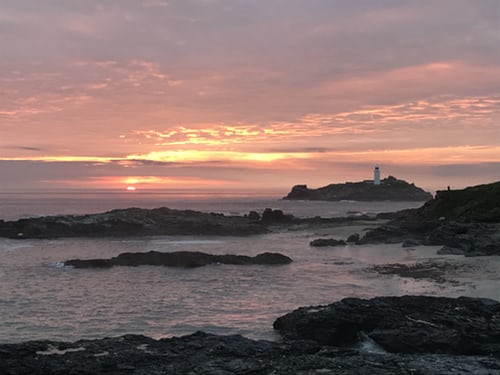
Well, it is has stopped raining for a second. As I stood on the sea front at St Ives, I saw a rainbow arching over the bay. The lighthouse stood white and proud in the low evening light at Godrevy, below it the foam specked rocks, black and jagged in the grey green sea. For a moment, just a moment, I stood and thought that all is well with the world. Perhaps this really was a sign of either God’s forgiveness or at the very least a gift from the natural world. I could look to the blue grey heavens with the golden light spilling over my shoulder towards the rainbow, lighting up the iridescent green of the headland at Godrevy, the sweep of clean sands along Gwithian to Hayle. I stood at peace, reconciled to my past, no longer angry at capricious dieties who have nothing better to do than to torment their creations with petty malice while demanding worship and the avoidance of sex. The world is a beautiful place.

Until a gull took a shit on my pasty.

Photo by Noah Silliman on Unsplash

Photo of Godrevy by Keely Schofield on Unsplash

Where is Thy Sting?

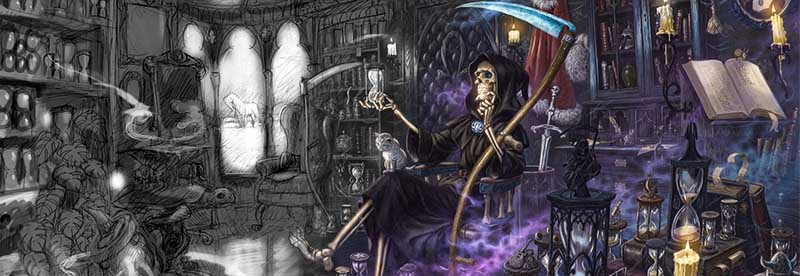
Along with bleeding gums, forced marriage and a winter holiday in Scunthorpe, death is not everyone’s cup of tea.

It is probably safe to suggest that most of us will avoid it if we possibly can.

Not everyone of course. There are a few who pray for it daily. They will be thinking it brings them closer to their chosen ‘Omniscient Invisible Friend’ who will bestow upon them protection from lakes of fire and sulphur, access to the intact hymens of 77 young girls or a ‘Zionist Chosen Land’ free from the requirements of International Law. They usually combine this wish with hatred of kaffirs*, apostates and the use of high calibre bullets. This diverse group of the followers of the three Abrahamic faiths, also include those who consider dancing to be the work of the devil, the ‘side-growth of your heads’ and the ‘edges of your beard’ to be sacrosanct, and would wince at sherry sipping.

Other groups are also found of death.

Just not for themselves.

Regardless of the promise of a life hereafter and the attentions of virgins, angels and the gift of a harp and cloud to sit upon, they’d rather pass. They are fond of it for other people though. The usual targets for special attention by these lovers of Thanatos are anybody not quite like them. Non white people, women and gays are favoured classes of people they’d love to facilitate a transition into oblivion. If this process is accompanied by blood, guts and a prime time spot on the Daily News, then even better.

For the rest of us however, death is as welcome a visitor as the coronavirus in your pasty.

And so it is that I find myself considering oblivion and its relative likelihood given the world is now in the grip of a pandemic. “To philosophise is to learn how to die” wrote Michel de Montaigne in the 16th century. He wrote that at a time when infants were lucky to get beyond their first birthdays and public health policies were no more than sitting in church and praying. This latter was as successful in healing one’s festering sores as dipping one’s testicles in warm wax was in warding off the pox. Both feel good, but are totally useless. The only beneficiaries were priests and wax sellers, and the odd goat bothering pervert in Kidderminster who had a penchant for testicle waxing regardless of ailments.

Given the expertise and leadership of the likes of Trump and Johnson, prayer is looking like a good option right now. I have of late never been one fond of mystical solutions to practical questions. I prefer an X Ray to Crystals and an Ambulance to rescue remedy, however with clowns in charge of the circus perhaps reacquainting oneself with the rigours of hand clasping and knee bending on the cold stony floor of one’s local church might seem more attractive. The four horses of the apocalypse – War, Famine, Pestilence and Death – have been joined by a new one ‘Fuckwittery’. He rides a few feet in front of the other 4, clearing the way and making their paths easier.

In the fact of the increasing certainty of one’s impending mortality, I can quite see the attractiveness of being more stoical and philosophical about matters.

Reading Epicurus, Socrates and Montaigne might bring some comfort as your ring-piece, along with other less important parts of one’s anatomy, evaporates within the fiery furnace of a nuclear explosion. Or, if your lungs begin to resemble the swampy marshes of Mordor, liquifying with each rasping intake of breath as the ‘old man’s friend‘ grips his bony fingers around each putrefying and pus filled collapsing lung, you might find comfort in the books of the Bible. Revelation perhaps?

I am not so much courting death as sending out non verbal hints. A nod and a wink perhaps, suggestive that should Death wish to make advances, then it might not be beyond possibility that a rebuff would not be forthcoming. I am unlike Marvell’s ‘coy mistress’ to whom he whispers:

But at my back I always hear 
Time’s wingèd chariot hurrying near; 
And yonder all before us lie 
Deserts of vast eternity. 
Thy beauty shall no more be found; 
Nor, in thy marble vault, shall sound 
My echoing song; then worms shall try 
That long-preserved virginity, 
And your quaint honour turn to dust, 
And into ashes all my lust; 
The grave’s a fine and private place, 
But none, I think, do there embrace
.” 

Marvell wished to have a hundred years to ‘praise’ her eyes, and two hundred to ‘adore each breast’ and thirty thousand ‘to the rest‘. Dirty Bugger. Her coyness was distancing his lustful advances. But Death? No, Death will not be so coy. Death will kick the bloody door down regardless of our preparedness.

I am ready. Many will not be.

oh death where is thy sting, grave where is thy victory?’ So wrote Paul to the Corinthians. Well, if we tweak the nipples of death, and poke the anus of mortality with the hot blade of humour, we might have the (very) last laugh.

*other categories are available including infidel, jew or sheep worrier.

“I know more…”

(If you don’t do irony…don’t read this…and if I need to state this to you, you shouldn’t be here).

I have decided to turn my life around.

I am going to start to believe in myself, have confidence and talk myself up. No more nagging self doubt and insecurity. I am going to follow my dreams relentlessly, and be focused on obtaining my goal. I am going to cash in my store of ‘self efficacy‘. I am going to ‘lean in‘ and I am going to develop the 7 habits of highly effective people. I will trust in my resilience and practice mindfulness.

Should I contract a deadly virus, I will engage my positivity and envision a healthy future.

For I have just found out that I actually know more about everything than anybody else.

How do I know this? Well, it is easy. You just have to listen to the best man in the world, a very stable genius, who knows everything about everything and then you will realise that if he can do it, so can you. It just takes hard work, ambition, narcissim, lack of self awareness, inherited wealth, sociopathy and a wig.

It helps if you have an ego so big it blocks out the sun.

On the medical issue of the coronavirus for example:

“You know, my uncle was a great person. He was at MIT. He was a great super genuis. I like this stuff, I really get it. People are surprised that I understand it. Every one of these doctors said: How do you know so much about this? Maybe I have a natural ability. Maybe I should have done that instead of running for President”.

This was Donald Trump when visiting the Centers for Disease Control (CDC) in March 2020.

It comes on top of his claims to “know more about renewables than any human being on earth“, to “know more about taxes, maybe in the history of the world” and “I know more about ISIS [the Islamic State militant group] than the generals do. Believe me.”

So, here is my list of things to do so that I can also become a very stable genuis but more to the point, to believe that I am, for that is surely the most important thing. Belief.

  1. Click my heels three times and say “I am a genius”.
  2. Start grabbing ‘Pussy’*.
  3. Imitate and Mock disabled people.
  4. Ensure I inherit wealth from my father.
  5. Ensure my father gives me loans and access to trust Funds while he is alive.
  6. Be even handed when dealing with Racists and Nazis.
  7. Tweet.
  8. ‘Punch down’ in my ascerbic and ‘comedic’ comments.
  9. Invoke a ‘conspiracy theory’ should someone get in my way.
  10. Be born white, American, male and extremely affluent with white American, male, extremely affluent friends and colleagues (woman are allowed as long as they are pretty and young and don’t mind a bit of pussy grabbing).

That should do it.

You see, I’m tired of whingers and moaners who complain every day about how life is hard, unfair, unjust and at times just a bit violent. Especially the women and ‘The Ethnics’.

If I think about it, I probably know more about being female than most women on the planet. For a start a woman gave birth to me, I have a sister, a daughter and an Aunt. I have seen women everyday of my life and listened to their chatter. I have read books about women, and studied glossy journals of a photographic nature which has enhanced my anatomical knowledge. I was a registered nurse and even slept with nurses ! I have been present at childbirth, bought tampons and watched ‘Loose Women’ on TV. I have seen two women Prime Ministers and followed a woman Presidential candidate. I married a woman and live with a woman. I’ve watched Mama Mia!, an episode of Sex and the City and followed closely the career of Jennifer Aniston especially since the ‘nipples out’ episodes of Friends. I have offered advice on cooking and cleaning to female partners, colleagues and friends. I know what PMT, Menopause and Exfoliation are.

We are surrounded by women and their habits…and after years of study and experience, I am surely very well placed to know what they are about, even before they know. They are subjective creatures running on emotion and so cannot be relied upon for objectivity. I can. For I know more about objectivity than any philosopher, ever.

As for the Ethnics. Trump is right. He is fond of Ayn Rand as are many ‘successful’ people.

Ayn Rand is the ‘go to’ person here (see I know about women and respect them!). Her ‘theory’ of objectivism** rejects the notion of the noble savage, believing that they are mentally inferior. The founder of the Ayn Rand InstituteLeonard Peikoff, has argued that if we were to “study savages in the jungle”, we would find that they are mentally “undeveloped” and “have no method and no discovery of any control over their minds yet.” Peikoff refers to such “savages” as “imagistic, pre-conceptual … fear ridden, (and) emotional ridden”, with a “primitive type of mind” comparable to a baby or an animal.

The Ethnics have not long come from jungles and so if you place them in modern cities, their undeveloped minds cannot cope. That is why there is violence and incivility in the ghettos. It is why they eat basic foods like rice and chicken perhaps with a chilli, because they do not have the mental capacity to develop a beurre blanc sauce or to create haute cuisine.

So thats it. Nor more apologising, or worrying about social justice, care or fairness, I’m just going to be the best I can be. Trump has shown me the way.

*an Americanism referring to a woman’s pudendal region. Not to be confused with actual cats.

** not to be confused with being objective, a state of mind unreachable for the common working class woman especially.

unsplash-logo
Sharon McCutcheon

Fly me to the moon

…but not to Newcastle, Newquay or Norwich.

Flybe collapsed on Thursday. The CEO blamed a snot encrusted cotton handkerchief for the airline’s demise. The offending cloth was found in the air conditioning unit of a Dash 8 Q400 and was responsible for spreading a virus throughout the cabin potentially infecting over 70 people.

Mrs Agnes Pantsgirdle was on the aircraft’s last flight from Manchester to Gatwick and was just one of the people exposed to the potential threat of experiencing a sore throat and ‘feeling a little off’. When interviewed by her local paper, Mrs Pantsgirdle described her ‘horrific ordeal’ when told by Flybe staff of the potential risk of exposure.

“I was at home enjoying a Prosecco while watching Eastenders when the call from Flybe came through. They said they were sorry to inform me that a used cloth had been found in the aircraft I was a passenger in. Imagine my horror. I spilled the glass and wet myself with fear. I shall be pursuing this in the courts for compensation. I will probably get PTSD if I think hard and long enough about this. Anxiety induced incontinence is not pleasant. My knickers were not cheap knock offs from the market, and Prosecco is a bugger to remove from one’s gusset. The shock was palpable, I can empathise with the citizens of Aleppo now.”

Other passengers were similarly incensed by the lapse in hygiene precautions of the airline.

Mr Barry Bashmebishop of Croydon has already organised an online support group for those affected by the crisis and asks anyone feeling a bit tearful to contact him or the Police.

“I blame the Chinese”, he said, “it must be their fault…or the Muslims…they don’t use paper tissues as it’s against their religion, and stuff, you know”.

This is not the first time a company has been undermined by a seemingly trivial issue. Who can forget the ‘Hymenoptera and the Tampon’ scandal, otherwise known as the ‘Ants in you Pants’ story of 1960? Or the thinning of the chocolate on the chocolate wafer that did for Arkwrights’ Chocolatiers of Preston in 1926? And we all know what a casual dismissal of the dangers of ice can do for a cruise liner company.

A Government Minister was quick to respond to the looming crisis for the UK economy of the company’s collapse but said “companies do fail and it is not the role of government to prop them up”. It was the view in Cabinet that Flybe always did have a dodgy business model. London and the South East was where all decent people wanted to live and work. “A pound spent in Croydon is worth more than a pound spent in Strathclyde” is the guiding principle. Mr Barry Bashmebishop (of Croydon) agreed.

Flybe however, had routes to Inverness, Newquay and Manchester. These are fine, if you like a bit of haggis, a pasty and a rain soaked pork pie. Opinion in Government was that all right thinking people however prefer Chelsea to Cardiff, Bromley to Birmingham and Deptford to Durham Tees. Therefore the regions should just wither and die, or reinvent themselves as hotspots of technological Silicon Valley development or tourism. Given any young person with ambition, hope and a brain cell moved to London and the vagaries of the UK weather systems, either ambition would be thwarted, strangled at birth by the umbilical cords of Northern intransigence, ignorance and incest.

Mrs Pantsgirdle confirmed the prevailing opinion of Manchester as a sodden cesspit of chippy northerners whose only merit was as a warning to Southern children about what can happen if you don’t eat your greens. When asked why she had been to Manchester, she replied that it was a need to see a “business client needing some services of a personal nature not available in the streets of Salford”. The exact nature of her business was not revealed, although she did look coy when asked about it.

Flybe’s collapse is merely another brick in the wall that is the United Kingdom’s gradual descent into obsolescence and break up into warring factions. London will soon declare unilateral independence offering citizen rights to the Home Counties. Cornwall is to be sold off to the highest bidder, a customs border will be built from the Wash to Bristol, and Newcastle can become an autonomous region for the terminally disaffected, disoriented and disillusioned.

No one will fly there.

Ever.

Isolation

The BBC today: “Some people are being asked to isolate themselves to prevent the spread of coronavirus”.

Ok.

My local pub has ‘characters’.

The full range of humanity is at times on display, and in the manner of the beasts of the African savannah, they tend to come to the watering hole at different times of the day. All are in need of refreshment after a hard days grafting at the ‘coal face’, in the white delivery van or with a particularly tricky spreadsheet. The dirt under the fingernails is often matched by the dirt in their heads and of their habits. And just like the wild things that come to push collective snouts into the liquid, they emit noises and grunts and flatulence that would make a spicey bean and kale fed vegan blush.

It is no accident that most of them represent the male of the species, the females are usually elsewhere seeing to the base layer of the hierachy of human needs. A few of the females do make an appearance and are thus noticeable by their rarity. One or two are even sober.

But.

The world is currently experiencing a pandemic, acccompanied by hyperbole, sensationalism, blame and the ‘soon to appear’ moral panic. Folk devils and scapegoats will have to be found.

First, we have ‘something defined as a threat to our society and our health’. There is a bloke who after his first pint starts mumbling into his beardy breath about “bloody migrants bringin’ in a virus”. The fact that his beard alone should be treated as public health hazard warranting a good rinsing with bleach followed by a blowtorch seems to have escaped him. I swear there are living pathogenic organisms clinging to the roots of his darkest, blackest follicles that have not seen daylight since the Black Death of 1347.

Then the likes of the Sun, the Mail and the Express start printing headlines about the killer virus that will eat your face unless you wear a full chemical defence suit. They do this just as there is a temporary blip in their foaming about Brexit. This virus is actually a gift from god to the media men and women of Fleet Street who have no need to go hunting for a serious story. All they have to do is recycle rumour, speculation and gossip before settling in their respective local pubs to make fun of the ‘poor people’ who have to serve them.

All of this results in the blokes in the public bar at my local being distracted from their usual discussions of “titties and beer” to orientate new blather towards that of imminent death which results from the germs to be found festering on the handle of the gents toilet door. Suddenly they are experts in virology and public health. It’s not their fault. They get their information from privately educated London based journalists who have as much interest in public education as they have in hand washing the skid marks found welded into the fibres of the course clothed gussets of the underwear of dockers overly fond of Guiness and a Vindaloo.

Photo by Dragne Marius on Unsplash

The next stage in this moral panic will be changes that will be made to social gatherings.

Such as ‘not going out’ being the new ‘going out’.

Anyone caught even twitching their nose in anticipation of a sneeze will be reported to the relevant authorities who will then visit at 3 in the morning to remove the offender to Chinese re-education centres. There they will be taught the first line self help treatments should they start to feel ill:

a) Taking themselves off to the shed at the bottom of the garden for three weeks, until death or boredom claims them. If they don’t have a shed…

b) Joining a leper colony. If there is not one in the locality…

c) Self immolation with aviation fuel*.

I’d like to suggest the following should seriously consider isolating themselves for the forseeable future:

  1. The ‘cat in the wheelie bin’ woman.
  2. The pissed bloke at the bar who has no clue about personal space, and breathes spittle into both your face and your beer.
  3. Any white middle aged bloke who starts by saying “I’m not racist but…”
  4. The first blue passport holder to come into the pub holding it aloft and shouting “I’ve got my country back!”
  5. Piers Morgan, Rod Liddle and Katy Hopkins.
  6. Any Leave Voter who is still mad at the EU.
  7. The first greasy haired, acne pocked, pasty faced, shit bucket ‘incel’ who complains he can’t get a girlfriend and therefore “all women should be gang raped by him and his mates” for ignoring them.
  8. Pussy grabbers.
  9. TV Evangelists.
  10. Public masturbators.

All of the above pose a bigger threat to public health and well being than a virus which could wipe out 5% of the world population at the first sitting.

*this can be purchased in the centre aisle of your local LidL or AlDI.

Sodding Turmoil

Sodding Turmoil

In the darkness of the low beamed snug of The Badger and Ferret in Little Sodding, Vicar Tiresomely-Preaching and the Squire, Sir Evershot Strangely-Bottom, sat within a fug of blue grey pipe smoke and two jugs of the session ale ‘Old Tractor’. They sat at a pub table notched and scarred with the results of sessions past and with soaked in tobacco stains. A log fire spitted and crackled with new logs. Outside, a wall of mizzle ambled by, soaking anything that was in its path within seconds. ‘Stobart’ the village donkey stood forlornly tied to a post, waiting its next trip over Sodding Hill to the village of Much Sodding. Occasionally, Stobart was diverted to Sodding Common to deliver pots of pickled cornichon that mysteriously appeared in the market at Much Sodding. Stobart was getting to know the hills of Muddlingthrewshire quite well ever since ‘Gullible Gordon’, the Little Sodding brewer’s son,  pioneered trade between the two villages. 

The Vicar was apt to lapse into nostalgia by about pint three of ‘Old Tractor’, and should he ever mix his session with Much Sodding’s ‘Eve’s Sin’  – a cider of such potency it could strip a Bishop of his inhibitions – his nostalgia could turn to self pity and vomiting. Squire Sir Evershot Strangely-Bottom would often listen with politeness at the vicar’s increasingly loud rumination about how things used to be before the donkey Stobart and his ilk had found a way over the hill and back again. 

The road between the two villages had  been repaired and was now of such a standard that its historical status as being ‘full of horse shit’ was now a distant memory. The repairs had been made easier by the funding that came from an agreement between Little and Much Sodding. This agreement amounted to allowing beer and cider to move between the villages without a tax being imposed on either. It also allowed the villagers to work and live in the other village should they so wish; it recognised that a gold coin in Little Sodding was to be as trusted as a gold coin in Much Sodding and should there be any dispute about the quality of ale or cider there was the establishment of the Sodding Court to settle it. Both Soddings diverted a little of the income tax they collected towards a common fund, which then was spent on projects that benefited them both, such as clearing and repairing the road between them. The ruts were smoothed out, the dung collected and sold for the roses in the village squares. Only the the rogues and vagabonds upon the Hill were put out, as they found the ability to accost unwary travellers was severely curtailed by the appointment of a special constable with a big stick. 

Constable Portly was well known in the area, and he wielded his stick with alacrity and not a little violence should it be needed. On the odd occasion he would leave blood stains and bits of hair and skull on his stick as a warning to those not willing to play by the rules. At a recent village fayre in Little Sodding, an amateur cider maker tried to pass off his product as ‘Eve’s Sin’ thereby undermining Much Sodding’s brewer in the The Prince and Peccadillo. ‘Eve’s Sin’ was a delight, if you like to lose your sensibilities after the second pint. Aficionados of this superior cider tended to sire more children, spend more money and lose control of bodily orifices at unplanned intervals, but it was unrivalled in taste. Portly, upon hearing of the much inferior product being passed off in the beer and pie tent, intervened with advice and a stick to the naïve and errant brewer. He reminded him that not only was his product inferior, it also threatened to bankrupt the makers of Eve’s Sin…and that was not to be countenanced in any civilised village.  

“We ‘ave an agreement, you see….we don’t piss in Sodding’s cider and they don’t piss in our Ale, geddit?” This was stage whispered into the recalcitrant’s ear, just as he as being carried away to see the alchemist to be treated for a head wound accidentally incurred while discussing trade law with the authorities.

The whole cosy arrangement concerning economic agreements between the two villages arose shortly after Gullible had returned with his first barrel of Eve’s Sin to The Badger and Ferret. 

George the Brew, Gullible’s father, had started a discussion in the bar regarding the easy availability now of a decent cider and how he was able to send a barrel of his premium ale, ‘Rectal Bleeder’, over the Sodding Hill.

“Would it not be of benefit to us all if we entered into some sort of ongoing agreement with the trades people of Much Sodding? They have items we have little of and I’m sure we have things they’d like. The swap of Ale and Cider has gone well, so why not…leather belts, flange boxes and our famous Mag pies? We could create some sort of common market or have a union of agreement? And, should young Gullible here meet a maiden fair of Much Sodding, why should she not come here to live? I could do with another barmaid who does not look like my mother.”

At the mention of maidens, the Squire’s eyes lit up. His best raunching days behind him, nonetheless he was not above dreaming about the lingerie clad frolicking and ale encouraged liaisons indulged in under a full moon and the heartfelt permission of a lusty gin soaked maiden. 

“But how do we know they will not send us substandard cider, especially if we don’t stop Stobart at the top of hill to taste it? Would we not have to permanently place Constable Portly at the top of hill, to check everything coming and going?”

This was indeed a vexed question. It involved coming to some sort of agreed standard setting about such things, so that Rectal Bleeder could go unhindered into Much Sodding’s pub and ‘Eve’s Sin’ could similarly be untroubled by the good Constable’s interference. Portly was certainly in agreement. He did not fancy sitting at the top of the Sodding Hill at all hours save only an owl for company, checking the comings and goings of beer and cider makers. 

And so it was that the Sodding Union came into being. Little Sodding, Much Sodding and Sodding Common all signed up. Although, in fairness, Sodding Common had only one inhabitant – ‘Muckraker Bill’ who traded in a superior quality of dung famed for increasing the productivity of Rose and Potato growers alike.  No one asked where he got the dung from or what animal it came from. Only it was known that the Common provided some of the best dung in the Shire. So much so that ‘Muckraker Bill’ was able, under the Sodding Union agreement, to get his dung recognised as special as a ‘controlled name’ referring to its land of origin. Sacks of Dung could only be called ‘Common Sodding Dung’ if it actually came from the Common and was hand shovelled by Bill himself. He even placed a mark on the sacks to distinguish his product from the inferior shit commonly found in the high streets of both Soddings. From a distance, the mark looked like a log with steam coming off it. Closer inspection would have revealed something else, but few wanted to get into the business of ‘closer inspection’ of sacks of shit. 

The log logo became a symbol of excellence recognised by prince and pauper alike. Other trades persons adopted the practice and should one’s product not come up to scratch, or another tried to pass their product off as something it was not, then a visit from Portly would soon set the worlds to rights. 

Roses bloomed and Potatoes were in abundance and everyone was happy. 

Except the vicar. 

He was now onto his third pint of ‘Old Tractor’. 

The mizzle outside the pub abated for a few seconds and then returned along with a shower and then a long belt of rain. This altered the mood somewhat inside, a gloomy mood for the Vicar facilitated in its gloominess by beer. The weather this side of the hill was affected by being on the wrong side of the rain shadow. Little Sodding’s annual rainfall could be measured in buckets, while Much Sodding’s rainfall was measured in thimbles. The Hill acted as natural barrier to rain clouds that came racing across the Muddlingthrew plain before they reached the hills. This climate seemed to fit the mood of folk, who lived within it…rain, mist, mizzle with the occasional sunbeam popping up on holidays and feast days. This was an indoor culture in which beer, pies and ‘furtive fettling’ in dark corners were the norm. 

“I hear there’s a new barmaid coming here from over the Hill. I would not be surprised if she brings with her Much Sodding’s ways.”

Over the hill was Cider culture, while this side was Ale culture and it was ‘well known’ that those who prefer to drink cider were ‘different’. They’d bake pies with garlic, infuse their cheeses (plural!) with apple and some such nonsense, and have started to make a drink from grapes. 

“No good will come of it, grape juice drinking. That’s the devil’s work, you mark my words, Squire, they’ll be selling all of their cheeses here next, fancy that more cheese than you can poke a stick in”. 

Cheese this side of the hill came in just one variety, and was named after ‘Steep  Hill Valley’, flanked by rolling milk producing fields. ‘Stipill’ cheese was a firm favourite. It was a firm favourite because it was the only favourite available. The folk of Little Sodding were simple folk, preferring simple tastes and predictability. ‘Stipill’ cheese was “good enough for grandma and so good enough for us”. The cheese was made simply, had one flavour and was unencumbered by such additives as herbs. It was a solid, traditional, dependable yellow block of cheese which if sliced in the proper manner delivered a tasty slice every time. It was often put on toast, but otherwise eaten with glass of beer and an apple. The cheese was not used for cooking, as Little Sodding’s cuisine did not include fancy dishes that includes sauces, garnish, shelled gastropods or garlic. 

The Vicar liked his cheese this way. The Squire was little more adventurous. He had secretly purchased some of the cheeses that came from the other side of the hill. There was the soft creamy white garlic infused roll, the rind enclosed wheel called ‘Brea’, and his personal favourite, the blue veined hard cheese called ‘Madame’s Fancy’ which was, when really hard and vintage, positively pulsing with taste. The latter he had eaten with a small glass of the strong alcoholically reinforced red grape juice known colloquially over the hill as ‘Haven’, the roots of the name were lost in the mists of time and story telling. The combination of ‘Haven’ and ‘Madame’s Fancy’ could easily lead to lewdness of thought if not debauchery of action. This is why the Squire liked it.

The Vicar, began to get some steam up, in the face of the silence of the Squire. It was all very well young Gullible opening up the trade over the hill, but one has to be very careful when dealing with folk from strange villages. They were not the quite the same as the solidly dependable folk around Little Sodding. Fancy foodstuffs were one thing but what if they brought with them new fangled ways in how to dress, how to speak or how to go about courting? 

It was of course true that before the road was cleaned up, relations between the villagers on both sides of the hill were pretty much non existent. The fact that your cousins often were encumbered with some form of body defect was taken as quite normal. In fact not seen as defect at all. Extraneous hair around ears, lips and navel, a very prominent Adam’s apple and flat barrel chest was seen among the women to be an asset rather than something evolved from lack of travel, and lingering too long in Steep Hill Valley. It was quite common for cousins and siblings to be mixed up due to the close resemblances to each other. Wedding ceremonies were often fraught with unwise couplings at the reception afterwards, especially after several ales and two or three slices of ‘Stipill’ cheese. ‘Madame’s Fancy’ was banned from such gatherings lest its heady taste lead to charges of ‘licentiousness aforethought’.  

The advantage of seeing strangers in the village was that native Little Sods could easily be distinguished from the strangers from over the hill due to the peculiar configurations of noses, foreheads and ears on show.  The result was to bond them even closer together, but from an evolutionary point of view, this really should not have been encouraged. Courting rituals involved tracing ancestry to try to ensure you were not marrying a direct relative, but this was not always observed. There was somehow a comfort derived from ‘bonding’ shall we say, with someone who looks like you. The disadvantage of seeing strangers in the village was that aesthetic comparison was immediately simplified and obvious. Long flowing nasal hair was beginning to be seen not as an asset to be lovingly encouraged among the women. They began to compare themselves unfavourably with the Much Sodding women who began to arrive without the accoutrements of hirsute olfactory decoration. 

There was envy in the air. The Vicar was picking up on these disturbances, and began to think whether all this mixing and trade was a good thing after all. Where would it all lead? Would the young men start urinating in public like they did in  front of The Prince and Pecadillo on busy market days? Things were not what they used to be. 

Gullible’s Travels

Once upon a time that were two small villages not too far from each other. Nestling among the Muddlingthrough hills, Much Sodding boasted a farrier, whereas Little Sodding was proud of its brewery. The road connecting the two was a winding, half cobbled, rutted, dung strewn affair. It’s tree lined hedges hid myriad dubious characters who were liable at any time to accost any poor wretch who dared to traverse the King’s Highway. If you stood on the granite steps of The Badger and Ferret in the high street of Little Sodding, the highway passed under your nose and carried on to your left towards Much Sodding. Should you find yourself lingering upon the Inn’s inner threshold, you would have your nose engaged with the highway before your eyes saw it, or any sound of its use arose, for it served the purpose of a lavatory, a waste system for the old throw outs of rotted vegetables from the Wednesday market, and a horse’ digestatory processing depository all in one go. 

In other words, it was full of shit.

This observation, by the way, was also an insult the denizens of Little Sodding (also known as little Soddoms) would later use – without irony – to describe any visitor from the next village of Much Sodding. The annals record that this became so popular that in future decades other towns and villages in the Muddlinghthrough Shire took it up as a favoured insult to anyone they did not know, found to be talking a lot with a funny accent.

To suggest the highway stank, was to be a statement of the ‘so bleedin’ obvious’ as to rank it alongside warnings isssued about the use of guillotines and excessive bleeding, bean eating and flatulence and the inability of Hollywood* producers to keep their trousers on. 

As the highway left the village it began to climb in quite a circuitous fashion due to there being a hill, the summit of which was often hidden in mist. The hill was named ‘Sodding Hill’ by later unanimous agreement between the inhabitants of the two villages. Anyone reaching the top was oft heard by a roosting crow to utter “That Sodding Hill will be the death of me”, a truth muttered often in jest or exasperation. A truth which at times visited itself upon the weary traveller due to robbery, hypothermia or as a result of the extra pie and pint taken in the Badger and Ferret the night before.


Sodding Hill then of course served as both defence and blockage between the two villages. The existence of each which was known only to the inhabitants of the other through rumour and legend gleaned from the lips of rain soaked, deathly pale and penniless venturers who sought refuge in either The Badger and Ferret or The Prince and Pecadillo in the two Soddings.

Little Sodding’s brewery had a reputation for producing ales of such quality that demand for it spread from the high street, to the old vicarage and on to the ears of Old Gilbert Fiddles who lived in the last thatched cottage overlooking the duck pond at the village boundary which lay at a point just as the highway began its climb up Sodding Hill. Vicar Tiresomely-Preaching, upon hearing of a new cask being opened in the Badger’s snug would not be above cutting vespers short so as to get a tankard full before Squire Sir Evershot Strangely-Bottom got wind of it and beat him to the virgin pint. They were fierce rivals and would go to any length to be the first to taste the sweet golden liquid that had never yet passed a man’s lips.


Demand for ale, meant demand for barrels and horses to pull the drey.

A problem of course is that horses need shoes, and to the little Soddoms’ chagrin that meant Much Sodding’s farrier. Yet for years, before the knowledge of the existence of the adjacent village, the poor horses of Little Sodding had to plod along very slowly in their bare feet, picking their way slowly through the highway’s detritus. This also meant that the brewery’s famed ales were famous really only in one village and particularly between a Squire and a Vicar.

Sodding Hill was therefore a barrier to trade, It not only was a physical barrier but for years blocked all knowledge of the possibility of an emerging market for ale beyond the borders of the village. The same was true in reverse of course. The farrier in Much Sodding, although excellent, often had to take holidays because all of the horses in Much Sodding were already “Sodding provided for, by me the Sodding Blacksmith” as oft grumbled the, er, Blacksmith.


After a long hard day’s forging, Rupert the blacksmith, would say “I don’t half fancy a drink of something…..cold and refreshingly hopped with a hint of citrus notes if only there was such a thing….well, I don’t really fancy water and tea has not yet been discovered…” But he was always disappointed to get home, wash, and then trudge to his local ‘The Prince and Peccadillo’ only to be served cider and rum. Not that that there was anything wrong with either save the offer was limited. There was something ‘missing’ in the bar that the ‘Huge Soddoms’ of Much Sodding could not quite put their finger either in or on.

This unsatisfactory situation continued for years because of Sodding Hill and the very poor and quite dangerous transport links between the two villages. In truth, the ‘transport link’ was only a shit and rat infested rutted roadway whose head was lost in the mist of the hill.

The brewmaster, in Little Sodding, one day had an idea when delivering his last two barrels of his premium ale ‘Rectal Bleeder’ which at 6% was the vicar’s favourite.

“Nice to see the delivery of a new ale George” said the vicar in the smoke filled darkness of the snug. “Don’t tell the Squire just yet”. The snug was otherwise empty and looking around, it occurred to ‘George the Brew’, that it would be a grand idea if there was another pair like the vicar and squire who required more regular slaking of thirsts. He could make more ale, sell more ale and free up barrels for fresh batches more regularly. There may be unintended consequences of the increased libatory habits of little Soddoms, but surely it would be a good thing to increase trade, if only the road was better and the barrier to moving stuff could be removed…he was of course referring to Sodding Hill.

Old George the Brew had a son, “Gullible Gordon” so called due to his propensity to believe in anything at all relayed to him by absolutely anyone, including the very odd traveller from over the hill who survived to tell of girls, freely galloping horses and a pub with only rum and something like apple juice on offer.


Gullible would repeat the tales to his father of a village over the hill and far away, a village in need of ‘something, but I don’t quite know what’. It was just such a tale that resonated with George the Brew, just as the Squire burst into the snug and upon spying the vicar reaching for the first pint of the new ale cried “Bastards! I’d have got here faster but the horse trod in some dung and refused to move until his toenail was cleaned…if only he had some sort of footwear protection…I’d have beaten you to it”.


Back in the brewery….

“How do you fancy a little trip son?” Fearful of what could become of him should he step one foot on the highway to Sodding Hill, George knew he could encourage ‘Gullible’ to go and seek out the truth of the stories. But, how was he going to get there?

Canals had not been thought about due to the requirement of digging a large trench and then lining it with bricks to make it water tight. This seemed like an awful lot of work to fulfil a function no one had fully thought was possible. This meant that canal boats had yet to be built, mainly because canals were non existent, this being a classic example of the chicken and egg conundrum. There were also no such things as aircraft. Both villages did not even have have a word for them, and security checks with rubber gloves were but a far off dream. Only the ‘road’ existed and this was braved only by a desperate few on foot and very occasionally a horse in pain going one way to the summit, but lacking the will to go any further, would turn back.

Oil was still underground in the desert in a strange hot dusty land far far away. Given the inhabitants of Much and Little Sodding on both sides of th hill had not ever heard of a desert, and given also that transport was impossible bar walking and coaxing a horse in pain, the lack of this commodity meant the horrors of car use was yet to come.

‘Gullible’ yet agreed to go over the hill in search of ‘something’ which he believed actually existed such was his store of delusion, self belief and it must be said, lust. For he had heard of fair rosy cheeked maidens who still had their own teeth and were free with their ‘liberties’ or so it was rumoured. He so wanted to believe, and so he was easily persuaded by his father to seek out men in need of ‘Rectal Bleeder’ and girls in search of ‘moral guidance’. Perhaps there may be something he could bring back, apart from a bruised ego ?


There was another force driving ‘Gullible’ onwards. A force which would not be held in check by trifling details such as the lack of canals, cars, trains or aircraft. This force lay dormant for millennia in the gonads of the most daring of tribes who otherwise had no choice but to restrict the radius of their travels to just a few miles in any direction, or as far as the lone tree on a green hill far away just outside a village wall, should they be so technologically developed as to add masonry skills to gazelle gutting and carrot growing. It is the case that travel was as mysterious and as dangerous an activity as witchcraft or the goat worrying activities of the pubescent male. This resulted in the often difficult practice of the disappointing search for breeding with someone who does not look like yourself or your sister…


And so it was that Gullible was driven by the will to lust, a primordial force strong enough to force him up and over the hill to discover new pastures and petticoats, to establish a trade route without the need to colonise, rape or pillage. He needed not a passport, nor points or tariffs. He was free to come and go as he pleased notwithstanding the rigours of travel itself.

One early dawn, armed with bravado, a ham and cheese sandwich and his father’s words ringing in his ears, “Go my boy, and don’t stop until you find thirsty men willing to accept a Rectal Bleeder”, Gullible set off with a donkey called ‘Stobart’ who carried a small barrel of George’s finest beer. Trudging though the village detritus in the high street, past the last thatched cottage by the duck pond and onwards towards the hill, Gullible (and Stobart) set off with Joy  in his heart and Hope in his trousers. 

The journey was easy at first, before the road started to wend its way upwards. However, the detritus became less dense and noxious as they climbed higher, as fewer and fewer folk ever travelled this way. Gullible’s heart lept at twigs cracking or leaves rustling, fearing he might be set upon by rogues and vagabonds hell bent on stealing his beer or wanton donkey fiddling. Dusk fell until right at the top of the hill, he was in darkness. An owl hooted. They were the only bird to have an equity card that allowed nocturnal performances, and they took full advantage to scare the living bejesus out of unwary travelling folk. 

A tiny thought crept into Gullible’s mind. “Maybe I should go back?” The donkey thought “where the flying fuck are we?”. Yet, the force was with him urging him on. He pictured scantily clad young ladies in frilly lace, just like the pictures his father had back in the Brewery office, pictures that the chap selling them had described as ‘artistic’ and therefore not rude at all. 

He travelled though the night, through dense trees with the moon trying to poke through the canopy. Finally he crested the hill and began the slow decent towards Much Sodding. Its lights were not yet in view and so the only guide was the occasional moonbeam on the road. 

The only sound was an owl’s hoot, and an occasional donkey fart. 

As the early rays of the dawning sun rose in the distance, Gullible reached the boundary to the village. There was a duck pond, and a thatched cottage and a sign pointing the way to the pub. As he trudged along, with Stobart occasionally stopping to eat nettles, he could smell bacon and eggs, baking bread and coffee wafting through the street. Up ahead in the distance, he could see a shimmering light. It was the Inn, with its staff preparing for the breakfast rush. A sign hung outside which simply stated “You can check in anytime you please”.  

Gullible encouraged by the sights and sounds of Much Sodding was only too keen to meet the Inn Keeper. A big disappointment at this time was the lack of frilly laced young ladies in view. No doubt they would come flocking to hear of the stranger from over the hill. But first to work! 

The landlord of ‘The Prince and Pecadillo’ was pleased to hear of the availability and novelty of the 6% ‘Rectal Bleeder’ and only asked that Gullible return to Little Sodding with a cask of his best cider ‘Eve’s Sin’ which at 7% became a firm favourite in the Vicarage after choir practice and before a confession. Gullible stayed a few days and indeed his attractiveness blossomed with each pint sold and tales of exotica from Little Sodding were told. He was not above embellishment, especially when it came to tales about his own prowess in brewing, donkey riding and what he called “Lady fettling”. 

The landlord of The Prince and Pecadillo was pleased to hear of the availability and novelty of the 6% ‘Rectal Bleeder’ and only asked that Gullible return to Little Sodding with a cask of his best cider ‘Eve’s Sin’ which at 7% became a firm favourite in the Vicarage after choir practice and before a confession. Gullible returned to Little Sodding on a horse who was only too happy to quickly trot over the hill, shod as it was with iron shoes of Rupert’s best quality. Gullible would trade with gold and silver coins happily accepted by the ‘Burghers of Much Sodding’ to ease the trade of iron shoes one way and ale in the other.

It was not long before other villagers began to take the same journey and to realise that the ‘little sods’, as they became known to the ‘huge sods’ and vice versa, had much in common, and that Sodding Hill could easily be overcome if they just encouraged as much movement up and down the road as possible. They’ve even clubbed together to fix the road and before long someone invented a railway. There was no need for a canal. One unintended consequence was that babies born in the Sodding’s were much better looking than they had been before, and quite a few resembled Gullible.


The End.


*of course, Hollywood at this time was only a lone cactus, a lizard and an outcrop of rock.

To Saffron

A gull effortlessly glides the wind, it’s wing feathers hardly ruffle as it cuts silently through the air. Across the great grey, sea green bay, the white lighthouse blinks rhythmically atop its sea battered black rocks. A short gap of foaming, current eddied swirling water separates it from the headland. The sweep of the cliffs to its right, then turn to beach, then to sand dunes. It is only 8 in the morning on a rather mild but overcast January morning. The sun has risen, but where it is, is anyone’s guess as cloud cover is about 100% stretching from all compass points to merge overhead as a blind grey white canopy of vapours. The only sound is a light breeze in the palm trees, and the shoreline waves far below on the beach. The quiet is momentarily disturbed by a car crossing the bridge over the railway line at the end of the platform, for this is where I stand. The 0810 to St Erth from Carbis Bay will soon trundle in, its steel wheels screeching against the curve of the track as the brakes bite. 

The long sweep of the platform is home to a woolly hatted, jute bag carrying, scarf wrapped passenger off to St Erth. That’s two of us in total. To the west, the track curves over the viaduct of the Carbis stream, the Wheal Margery adit, and hugs the cliffs as it heads toward St Ives. Any train going that way will arrive in just 3 minutes. The line itself cuts deep halfway up the steeply wooded cliffs and is overlooked by some very grand houses on Hain Walk, the coastal path into town. The chapel of St Nicholas on St Ives island is clearly visible from the platform on Carbis Bay as it pokes its nose from around the final headland. For now the delights of St Ives, the beery hospitality to be found in The Sloop, The Pilchard Press or The Beer and Bird will have to await another day. As will the hot steaming steak pasties. 

For I am going East. To St Erth, Exeter, Paddington and on to Audley End near Stansted Airport. This will take about 10 hours. The train from Carbis By to St Erth will take about 12 minutes. It hugs the coast all of the way, overlooking the magnificent stretch of the beach of Porthkidney sands, to the lighthouse and the ebbed tide mudflats of Hayle estuary. Wading birds are having breakfast all along the shore; oyster catcher, turnstone, curlew and heron. And of course the ubiquitous gull. 

To avoid stress, I prefer to give myself more than just a few minutes between connections. The next train to Exeter is the 0858, some 35 minutes after my arrival at St Erth. There are earlier trains but I have booked the 0858. Upon alighting, I am joined by a ‘throng’ of commuters going to…? Most are young, college student types. I say ‘throng’ but to qualify as such requires far more bodies than the 4 currently sitting, texting, sleeping, headphoning on the bench on platform 2. The are also two men also waiting patiently for the train, dressed in everyday work gear, no doubt on their way to close deals on procuring pasty meat or a wide range of root vegetable based commodities. 

St Erth hosts a tea shop on platform 3. Upon entering you have walked back in time to the steam era, circa 1950 or even earlier. There is precious little in decor, furniture or snacks on offer to make you think otherwise. The walls are covered in railway memorabilia, posters from the 1930s extolling and depicting the virtues of steam travel to all the beauty spots of Britain including Clacton. A steam whistle can be heard as the Cambrian Coast Express clatters to Aberystwyth or the Cornish Riviera skirts Dawlish. The tea room is delightful and wholly in keeping with St Erth station itself which still has proper semaphore signals and a signal box.

A small brown pot of tea on a tray, with a china cup and saucer, a custard cream biscuit and a small glass bottle of milk. Cash. No cards. The tea pot is the gold standard of tea pots, not the stainless steel beloved of other cheaper cafes. You know the sort of steel tea pot I mean. It pours tea at angles that are always unpredictable and which defy the laws of fluid dynamics, while also dribbling down the spout to deposit hot tea onto your lap. Stainless steel danger traps have been around for decades, they should be collected and sold for scrap. The little brown ceramic tea pot is perfection. It has one job, and it does it perfectly without fuss. It is design genius. Whoever thought they could better it with steel, was a misguided fool at best. I’d personally design a version of hell for him. It has to be a man, no woman would ever be so arrogant or stupid so as to think perfection can be bettered. Female ego requires no lasting legacy to shore up the otherwise fragility of the male variety. The version of hell that awaits the steel tea pot designer includes a pot of hot tea, drips of scalding hot liquid dropping from it’s spout at minute intervals onto one of his baby smooth shaved, naked testicles. For eternity. 

Right on time, the 0858 arrives. For railway buffs, and you know who you are, it is a ‘short form HST’ of 4 coaches and a power car at each end. To the rest of you…this is the old HST that served for decades going between Paddington and Penzance, and between everywhere else in Britain until the introduction of the newer Hitachi built sets introduced recently on the network. Other trains you may have experienced are the old rackety slow, noisy rattlers such as the one that runs on branch lines. We arrive in Plymouth at 1048. Two hours later. GWR do not bother with buffet facilities on this stretch of line, on these ‘local trains’. This qualifies as a local as it terminates at Exeter. If you want refreshment you had better bring your own, or ask your personal assistant to organise it. A toilet is available upon request. Incontinence is frowned upon, apparently. Dehydration is your responsibility. Yet, this is far better than chancing your luck on the killing fields known as the British trunk road system. The seats are comfortable, wi fi is available and off peak there is plenty of room. The view of course is magnificent as one slices quietly though the rolling hills, tors and estuaries of Cornwall and Devon. 

I could drive to Saffron Waldon. 

In the past it has taken the best part of 7-8 hours. It would mean concentrating all of the way, staring at the road in the middle distance or at the myriad red tail lights heading for destinations such as Much Sodding, Little Sodding and Sodding Off Common in the shires between Plymouth and London. Some even drive to Swindon. I could brave the vagaries of the average British car driver whose skill and expertise in controlling the steel death trap that is your modern vehicle is in inverse proportion to their perceived competence and ego. I prefer to avoid the pouting selfie obsessed social media influencer driving on the M4 to make her next podcast on ‘mindfulness, lip gloss and self esteem’ (brought to you by L’Oreal), and driving while texting or crying because her muscle bound, shaven headed, boyfriend has been shagging her best friend (again). Or, the young lad thinking he is a F1 spunk muppet able to drive at 90 mph when the motorway is rammed with 3 lanes of backed up bollocks due to road works or ‘sheer volume of traffic’. Or the middle aged, middle class, middle England, middle lane crawler who thinks it “perfectly acceptable to drive at exactly 70 miles an hour because that is the speed limit anyway” while being blissfully unaware that traffic is building up behind for 10 miles as delivery drivers in white vans and articulated lorries begin to fume as deadlines pass and tachographs insist it is time to stop well before the destination is reached. The degree of pent up fury behind, boils over into risk taking, road rage and burst aneurysms while middle lane man continues unabashed at the mayhem behind. His wife at his side is merely thinking about what is for tea or how best to commit suicide. I could enjoy service stations. I could pay the GDP of Nigeria for a burger whose taste and consistency would rival that of baked cow dung, for coffee so weak that a doctor would put it on life support and for the experience of navigating the crowd of howling, spitting, pissing, crying humanity that passes for adulthood in transit or their alienated and demonic offspring demanding to be fed, watered and entertained for every waking second of their pitiful little meaningless lives…lives which will soon be wiped out in the coming climate catastrophe, a catastrophe whose only good point will be ending once and for all the incessant hell that is motorway traffic. 

Yes, I could drive. 

I could arrive spent. Drained of all energy, enthusiasm and zest for life. I could risk all on the throw of a dice, my life depending on the rest of stupid humanity staying awake and alert and actually paying attention to the road conditions as they actually are and not as seen on TV in car adverts, adverts whose grasp of reality is similar to that of a born again Christian’s views on evolution, same sex relationships and applying the healing powers of Jesus to victims of a nuclear explosion. 

I think the train is better. I can sleep, write, drink, breathe…in fact I can undertake most of the activities of daily living excepting ‘expressing sexuality’ and the tasks of ‘personal hygiene’. I can let my mind wander to things esoteric and ordinary; about pork pies, the 101 use of a paper clip or upon Hegelian dialectics and its application in post industrial capitalism. In my youth, I could peruse the opportunities and joys of sexuality on long journeys but those days are long gone. I prefer to think about pie based nourishment rather than nipples, about politics rather than pudenda and I cleave to my remaining vestiges of sanity rather than the various cleavages of rampant sensualities. I would no longer know what to do with it, if it offered to sit on my face. I would probably cry out in distress gasping for air. 

Teignmouth. Across the stillness of the estuary, the opposite bank is lightly clothed in mist. The water is glass. All is light brown and grey from mud to sky and yet in it stillness there is a quiet beauty. We have increase speed towards our destination. Topsham and Exmouth on one side, Powderham on our left. Green water meadows replace the estuary, the tower of Exeter cathedral looms out of the mist. Time for a short break. 

Starbucks. How does this strike me today as I wander along platform 1 at Exeter St David’s? I have an hour to spare before the 1306 to Paddington. What options do I have other than a coffee in Starbucks? I could write an article for the Guardian or the West Briton. I could sketch out a policy for addressing climate change adaptation programmes, I could work out some song lyrics? I could be sipping piña coladas in Mustique while planning the downfall of financial capitalism using only words, protest and the death of hope. Instead, in the cold and grey of a January sky, I amble towards Starbucks, for there shall I find the stillness of a quiet mind, the peace and love that surpasses all understanding and a flat white. 

A flat white. The coffee equivalent of mediocrity, so devoid of challenge or stimulus that it is offered as a soporific to the terminally deranged of mind and the dangerously active. Why I choose this inoffensive caffeine beverage at such times is probably down to paring down decision making to the barest minimum so as to save brain energy for more important matters such as paying attention to itches, day dreaming or watching the cloud smother all sense of optimism in the benevolence of destiny. As I step up to the counter to order, the phrase “flat white” trips off my tongue as if it has a life of its own. I’m not aware of exercising any conscious cognitive processing. This can only be a Pavlovian stimulus-response thing. The very kind and understanding young lady who takes my order then asks a question so unexpected that I’m momentarily stunned into bowel twitching confusion. I am well used to the paring conversational couplet of ‘give order-ask for money’ script that is then followed by two ‘thank yous’ (client and vendor), that I’m out of sorts when the unexpected happens. 

“Name?”

What?  Name? Mine, hers or the coffee’s? What is my name…and is that it? If so what shall I offer and does that matter? What is she going to do with it…check my bank account details or call Interpol? Of course, she needs it to write on the order !  It’s a Starbucks thing. Probably a Costa and a Nero’s thing as well? What if I give the same name as someone else in the queue? How would I know and would this result in a fracas as we both similarly named grapple with a flat white? Sharing a name is not improbable, nor is sharing the same order for a coffee. After all when you have exhausted the list of espresso, latte, mocha and cappuccino there is only one place left. The flat white. By my reckoning that is a mere 1 in 5 chance of ordering the same thing. You’d not want to live in a world with only a 1 in 5 chance of catching syphilis, being hit by a train or having to watch the One Show. Next time I’m taking a flask. It’s not worth the risk.

I cradle the mildly hot cup of coffee as I sit in the ‘cafe’. It has of course the little design in the froth so beloved of baristas which I think is their attempt to bring some joy into an otherwise joyless world. It is the sigh of the oppressed creature as it navigates the river of the vale of tears we call life. This coffee is the heart of a heartless world, and the soul of soulless conditions. It is the opium of the people. Starbucks have not invested too much into making the seating area a place of rest and succour. Their business model must be “buy coffee-now fuck off”. As I sit I can hear my life ebbing away slowly with every silent tick of the clock that is my heart. I can hear a gaggle of American students at the next table. No doubt excited at their studies and life opportunities that Exeter University offers before the bitter pill of disappointment, ennui and pregnancy ruins their overblown dreams. That’s just the boys. They’ll be studying law or medicine with a naïve intention of ‘making a difference’, or some such total bollocks, with the unbounded enthusiasm of a cocker spaniel at walkies time not realising they are being taken to the vet for testicle removal. 

Youth is for the young, a truth as universal as is clichéd. I’ll leave them to their coffee and misplaced hope. 

Platform 5 for the 1306. 

Bright white, lights in the distance herald the arrival of the green, sleek, well oiled machine that slinks quietly into the station. It hums as it passes before stopping. It’s doors, starship enterprise in fashion, ooze open. I find my seat. 

Often on trains one may hear a child cry. There may be a drunk snoring. There are any manner of sounds to soothe one’s journey. Then there are those, who having partaken of a G and T or three, just talk. How do I know? Just one seat away, there is a party of women of indeterminate age on a ‘weekend away’ to London. I know this much because of the volume being turned up to 11. I am treated to a whole cornucopia of topics that roll into one another with no underlying coherent narrative or end point. Only when they fall asleep or are arrested will there be any respite. The topics are personal and incomprehensible spoken with a rapidity of speech to make one doubt one is hearing a known language. My ears start to bleed and I am starting to wish I was on the M25 being tailgated by white van man as I get stuck behind a middle lane crawler. They talk over each other and thus break all the normal rules of effective communication. I suspect the point however is not to pass information or to share knowledge but rather the point is just the sheer bloody joy of hearing ones own voice, with meaning being an add on rather than a necessary end.   Homo Sapiens developed a frontal cortex to facilitate quite complex cognitive processes, to the extent that we have had an Enstein (the physicist, not the alleged actress raper), a Darwin or even a Jeremy Kyle. I’m afraid the gift of coherent speech and narrative has been lost. Is murder acceptable on trains any more?

One has just had the temerity to state they have booked the ‘quiet coach’ on the way home, with absolutely no insight or irony. Good God…and oh no, they have returned to the contents of the dinner at Wetherspoons. 

I think I’ve just met the whole population of Cornwall in one go on the platform of Liverpool Street Station. The only difference is that they are at times better dressed, at times very badly dressed but otherwise anonymous. Just the sea of faces washing past me in waves of stress, stupidity and haste. This is where all of the young people are. I’ve noted before that in city centres those over the age of say, 55 have been banished or have wisely absented themselves. 

The tube from Paddington takes nearly 20 minutes and is relatively quiet given we have to pass through Kings Cross and Euston. I said, ‘stupid’ because I am prejudiced against city dwellers, especially in London. I left Carbis Bay this morning and as the train trundled around the first bend, the whole of Carbis Bay beach was before me, excruciatingly beautiful. Heartbreakingly beautiful. Why would I want ever to leave? One has to be stupid, right? At Liverpool Street I have an hour to kill and so I leave the station at the Bisphopsgate entrance. Emerging from the platforms below street level into the dusk of a London evening I am confronted by a seething mass of humanity all going somewhere while being in nowhere. Dusk? How can you tell when you are immediately hemmed in on all sides by huge steel and glass towers. The sky is up there somewhere. My vision, my view, is restricted to the distance of the width of the road which is rammed with traffic. 

You know London, if you’ve never been here you’ve seen it a thousand times on the tv and in films. 

I’m in Dirty Dicks pub listening again to wankers talking about their London ‘properties’ (Hampstead), yes that is plural. I’m near the epicentre of financial London, where the c*nts crashed the economy for which we are still paying. I’ve got this feeling before. I’ve lived too long now back in the fresh open air of Cornwall, jeez this is claustrophobic. The pub sells IPA and lager. That’s it. I asked for a bitter was offered a pale imitation of the stuff. Fashion can take its own arse and stuff it. The only drinkable beer was Guinness which is often the saviour for the more discerning palate. 

With 20 minutes to go I ‘amble’ back across the road. Again the wall of humanity presses in from all sides, all wired, all going at pace. I used to love the buzz, now it seems really weird. Have I changed? Without question. Have the cities changed? Without question. It is here among the deciders and the trapped that I feel the insolubility of our present predicament as a ‘civilisation’; so disconnected, so separate from our natures, from nature. I guess if the only thing you know is a glass cage, then you cannot think of another more beautiful world our hearts know is possible. Perhaps I’m overthinking, over feeling the disconnect I tangibly feel in the heart of the City, but disconnect it seems to be. 

I stand and wait for a few minutes underneath the orange lit information boards indicating which trains go to where from what platforms at what time. As I stand quite still, I am the lighthouse that sees the waves crashing endlessly around me. I’m convinced many if not all do not see me even as they pass right beside me, when at last my platform is displayed. 

The train consists of of 12 coaches. It is packed. Pretty much full now. The silence is deathly. Everyone is plugged in and networked. Everyone. There is absolutely no noise from a human voice. No one. I am surrounded by people but quite, quite alone. I think I’d be arrested as a weirdo if I started talking to someone, this being a commuter train…the 1737 to Cambridge. Isolated individuals going home to an isolated nuclear family. No wonder we are able easily to divide, separate, avoid. Our monkey brains are crying out for mutual back scratching and tick picking but it ain’t happening. Lost in a world of false dreams, striving to achieve what exactly? If this is how you treat your humanity day in and day out no wonder you need soma, booze, drugs or the glamour of other worlds on the tv big screen to filter out the alienation or a day spent in limbo. No amount of therapy is ever going to make this better. Mindfulness? I’m sitting being mindful of my immediate environment,  and frankly it is shit. I’ll not be mindful, I’ll drink instead. Except there is no buffet or refreshments at all on offer. This is not the first time I’ve palpably felt stressed in London. I look around but no one seems to be. Dare say I’m not giving out any signs and my heart rate is fine. So it must be a mental thing. I need art right now, I need sky and light. I need a fine wine, opera house, favourite melodies…I see toys, boys, electric irons and TVs. My brain hurts like a warehouse, there is so much room in there. 

Another 30 minutes and I’ll be in Audley End, near Saffron Waldron. Sanity beckons in the form of two old friends and a bottle of something nice.

It’s been over 10 hours now. I think I’ve had enough. 

A bientôt.